RESOURCES
Everything you need to know about manga localization, multilingual AI data, and more.
- What Is CCC’s Quality Assurance Process?
- Does CCC Use AI for Manga and Comic Translation?
- What Is CCC’s Production Capacity for Manga and Webtoon Localization?
- What Is the Typical Turnaround Time for Manga and Webtoon Localization?
- How Does CCC Select Its Translators?
- What Is Webtoon Localization?
- Translation vs. Localization: What’s the Difference?
- What Is Manga Typesetting?
- What Is MTPE?
- What Is Manga Localization?
Quality assurance is integrated into every stage of our localization workflow rather than being treated as a single final review. After translation is completed, a separate Translation QA specialist reviews the work to verify accuracy, consistency, terminology, and natural readability. Likewise, after typesetting, a dedicated Typesetting QA reviewer checks formatting, text placement, typography, and [...]
Artificial intelligence has become one of the most significant developments in the language services industry, and comic localization is no exception. At CCC, we believe it is important to acknowledge these technological advancements while recognizing that every client has different needs and priorities. Today, many publishers continue to prefer a fully human localization process, and [...]
Production capacity depends on the client's workflow, project requirements, and desired turnaround time. For new partnerships, we generally recommend starting with a smaller volume (typically around 500 pages per month for manga projects) to allow both teams to become familiar with each other's processes, communication style, and quality expectations. This gradual approach helps establish [...]
Turnaround times vary depending on the length, complexity, and scope of a project, but for most manga and webtoon chapters, our standard localization process takes approximately one week from start to finish. As a general guideline, translation can often be completed within four business days, followed by approximately three business days for typesetting. If [...]
Finding the right translator goes far beyond language proficiency. At CCC, every translator goes through a structured evaluation process that includes translation tests to assess not only their language skills, but also their ability to understand context, tone, and the unique storytelling style of comics, manga, and webtoons. Each test is evaluated by an [...]
Adapting Vertical Comics for Global Audiences Webtoon localization is the process of adapting digital comics for readers in different languages and regions while preserving the original reading experience. Because webtoons are designed for vertical scrolling and mobile-first consumption, localization involves unique linguistic and production considerations. What Makes Webtoons Different? Unlike traditional manga, webtoons often feature: [...]
Understanding Two Frequently Confused Terms Translation and localization are closely related, but they are not the same. Translation focuses on converting text from one language to another. Localization focuses on adapting content so it feels natural and culturally appropriate for a specific audience. Translation The primary goal of translation is linguistic accuracy. Examples include: User [...]
The Final Step That Brings Localized Manga to Life Manga typesetting is the process of placing translated text into manga artwork while maintaining readability, visual balance, and the original design intent. Once translation and editing are complete, typesetters replace the source text with localized text inside speech bubbles, narration boxes, signs, and sound effects. Why [...]
Human Expertise Enhancing AI Translation Machine Translation Post-Editing (MTPE) is the process of reviewing, correcting, and improving machine-generated translations to meet professional quality standards. Rather than translating from scratch, linguists begin with an AI-generated translation and refine it for: Accuracy Grammar Terminology consistency Style and tone Cultural appropriateness How MTPE Differs from Traditional Translation Traditional [...]
More Than Translation: Bringing Manga to New Audiences Manga localization is the process of adapting manga for readers in another language and culture while preserving the original story, tone, and reading experience. Unlike standard translation, manga localization goes beyond converting Japanese text into another language. It involves adapting dialogue, cultural references, sound effects, honorifics, jokes, [...]
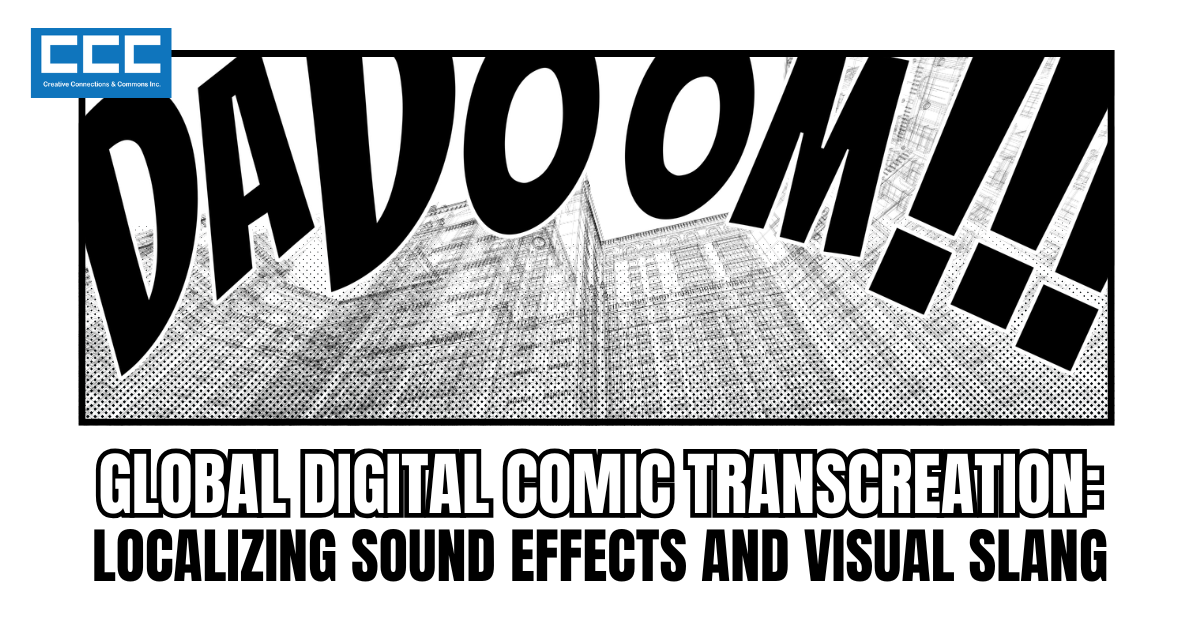
Bridging Artistic Heritage and Linguistic Nuances Across International Digital Comic Platforms Key Takeaways Beyond Literal Translation: Sound effects (SFX) and visual slang are fundamental visual and narrative elements in digital comics. Literal translations destroy kinetic energy and reader immersion. Cultural Soundscapes: Different global markets utilize distinct sound systems, from East Asian mimetic state descriptions [...]
By Honey BalantePublished On: October 30th, 20266.1 min readCategories: Manga and Comics Typesetting, Manga, Webtoon, Comics, Translation and LocalizationTags: Localization, manga typesetter, SFX, Sound Effects, Transcreation, Visual Slang, webtoon typesetter
Technical Standardization Guide for Graphic Editors, Retouchers, and Localization Managers Key Takeaways SFX Localization: Localizing SFX requires isolating line art, screentones, and gradients without destroying background pixels. Art Reconstruction: Repositioning vertical panels creates art voids that require redrawing perspective, anatomy, and environment. Structured Workflows: Standardized multi-layered DTP file architecture ensures non-destructive editing and seamless [...]
By Honey BalantePublished On: October 26th, 20269.8 min readCategories: Manga, Webtoon, ComicsTags: manga typesetter, Post-Editing, Post-Editor, Webtoon, webtoon typesetter
Artificial intelligence is quickly becoming part of how people work, study, search for information and interact with essential services. AI systems are already assisting customers, transcribing conversations, translating content and helping people complete tasks that previously required considerably more time and effort. These conveniences should not belong only to people who speak the languages [...]
By CCCPublished On: October 5th, 20269.8 min readCategories: Multilingual AI Data, Transcription and Data Collection, Translation and LocalizationTags: Machine Translation Post-Editors, Multilingual Services, Transcription and Data Collection, Translation and Localization
한국 웹툰이나 만화를 일본에 선보일 계획이라면 먼저 결정해야 할 것이 있습니다. 일본 독자에게 어떤 형식으로 작품을 전달할 것인가? 원작의 세로 스크롤 형식을 유지해 일본어로 서비스할 수도 있고, 일본 만화 독자에게 익숙한 페이지 형식으로 재편집해 디지털 만화나 단행본으로 출간할 수도 있습니다. 어느 쪽이든 한국어 대사를 일본어로 옮기는 것만으로는 충분하지 않습니다. 언어와 글자의 방향, 말풍선의 형태, [...]
By CCCPublished On: September 25th, 20260.1 min readCategories: KRTags: Manga Translation and Localization, Multilingual Services, Webtoon-
If you are planning to bring a Korean webtoon or manhwa to Japan, one of the first decisions is: In what format should Japanese readers experience it? One can retain the original vertical-scroll format and publish it in Japanese. One can also re-edit it into the page format familiar to manga readers for digital [...]
By CCCPublished On: September 25th, 20268.4 min readCategories: Manga and Comics Typesetting, Manga, Webtoon, Comics, Translation and LocalizationTags: Manga Translation and Localization, Multilingual Services, Webtoon