Learn how print comic to Webtoon conversion works, from panel restructuring and lettering adjustments to cleanup, redraw, and final file preparation.
How to Convert a Print Comic to Webtoon Format Without Losing Its Visual Impact
A comic designed for print cannot simply be stacked vertically and published as a Webtoon. Printed pages and vertical-scroll comics control pacing, composition, and reader attention in fundamentally different ways. Effective conversion therefore requires more than cutting apart panels; it requires thoughtful visual adaptation.
For creators and publishers with an existing catalog, a professional comic to Webtoon conversion service can transform print pages into a mobile-friendly format while preserving the artwork, narrative flow, and emotional impact of the original.
What Is Print Comic to Webtoon Conversion?
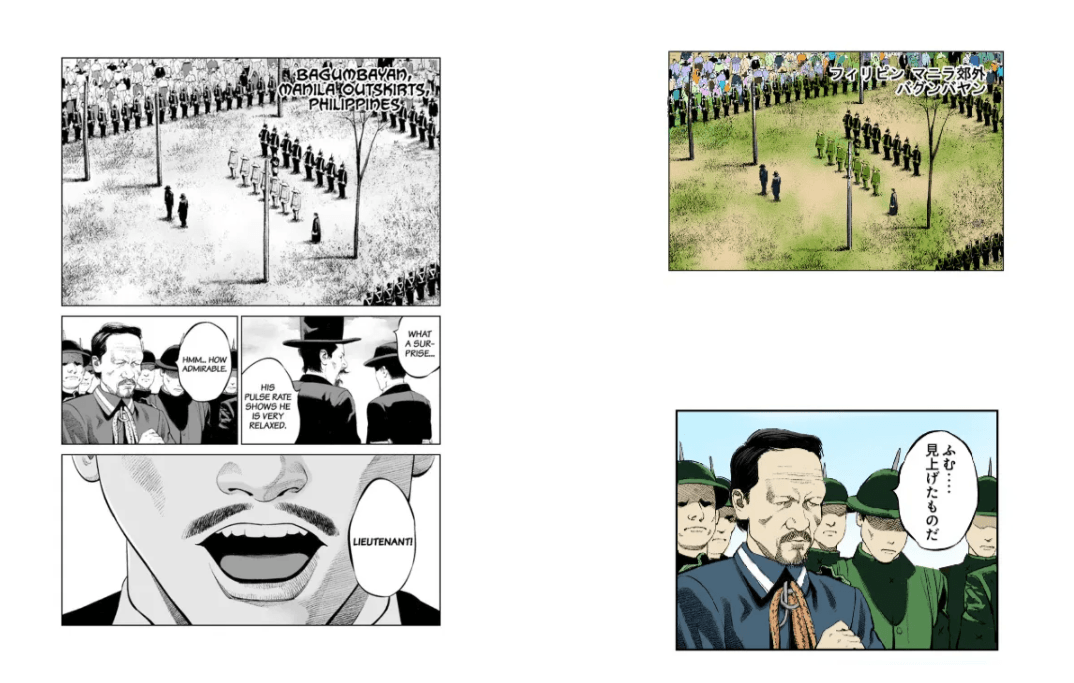
Print comic to Webtoon conversion is the process of adapting traditional comic pages for vertical scrolling on smartphones and other digital devices. It may also be described as manga to Webtoon conversion, comic verticalization, or page-comic adaptation.
A traditional comic page usually presents several panels simultaneously. Their size, placement, and relationship to one another help control the scene. A Webtoon reveals panels gradually as the reader scrolls. This changes how readers experience dialogue, action, suspense, and transitions.
- A complete comic to Webtoon conversion service may include:
- Separating and reorganizing panels
- Rebuilding the vertical reading flow
- Resizing or reframing artwork
- Adjusting speech balloons and lettering
- Cleaning and redrawing exposed areas
- Adding appropriate spacing and backgrounds
- Preparing files according to platform specifications
- Conducting final visual and technical QA
The objective is not merely to make the comic longer. It is to make the story feel as though it was designed for vertical reading.
Why Automated Reformatting Is Often Insufficient
Basic tools can cut a long image into smaller files, but they cannot reliably decide how a printed composition should be reconstructed. The difficult part of traditional comic to Webtoon conversion is not exporting the files—it is interpreting the page.
Overlapping panels, full-page artwork, unusual balloon placement, embedded sound effects, and complex backgrounds may all require manual decisions. A panel that works well across the width of a printed page may become too small when placed on a mobile screen. Dividing it may improve readability, but an awkward division can weaken the composition or confuse the sequence of events.
Professional comic reformatting services account for these visual and narrative consequences. Each panel is assessed according to its purpose rather than processed according to a single automated rule.
The Comic Verticalization Process
A structured comic verticalization service generally follows several stages.
1. Reviewing and Preparing the Source Files
The production team first reviews the available files, including resolution, dimensions, layers, lettering, and artwork condition. Layered PSD or Clip Studio Paint files usually allow greater flexibility than flattened JPG or PDF files.
However, graphic novel to Webtoon conversion is still possible using flattened files. These projects may simply require more cleanup, redraw, and lettering reconstruction.
Whenever possible, the source package should contain separate layers or files for:
- Artwork
- Speech balloons
- Dialogue
- Sound effects
- Panel borders
- Background elements
Organized source files reduce unnecessary reconstruction and make the Webtoon format conversion service more efficient.
2. Separating and Reorganizing Panels
The next stage involves extracting panels from the original pages and positioning them in vertical sequence. This comic page to vertical-scroll conversion must preserve the correct reading order while adapting the presentation for mobile screens.
Not every panel should be treated identically. Some can remain intact, while others may need to be:
- Cropped or reframed
- Divided into multiple images
- Enlarged for readability
- Extended through redraw
- Combined with backgrounds or transitional space
The resulting Webtoon panel layout should guide the reader naturally down the screen without making scenes feel either crowded or unnecessarily stretched.
3. Rebuilding Narrative Flow and Pacing
Spacing is part of Webtoon storytelling. A short gap can keep dialogue moving, while a longer gap can create suspense, represent elapsed time, or prepare the reader for a reveal.
During page comic to Webtoon adaptation, the production team considers where each panel will appear on the reader’s screen. Important reactions or story revelations should not be exposed prematurely. Dialogue should remain connected to the correct artwork, and action should progress without confusing jumps.
This is where professional Webtoon adaptation services differ most clearly from simple image slicing. The team reconstructs the reading experience instead of merely changing the canvas dimensions.
4. Editing Panels and Reconstructing Artwork
Some print layouts contain overlapping images, irregular borders, or artwork concealed behind adjacent panels. Once these elements are separated, missing areas may become visible.
Webtoon panel editing can include extending backgrounds, reconstructing borders, removing page-specific elements, repairing cropped artwork, and creating transitions between images. When significant visual reconstruction is necessary, the work may require dedicated Webtoon cleanup and redraw.
The amount of editing varies considerably by title. Comics with rectangular, non-overlapping panels are generally easier to adapt than highly stylized pages with integrated artwork and lettering.
5. Adjusting Lettering and Sound Effects
Lettering created for print may become too small or poorly positioned on a mobile screen. Speech balloons can also be split from their corresponding characters when panels are rearranged.
- Professional Webtoon lettering adjustment may involve:
- Resizing text for mobile readability
- Repositioning balloons and dialogue
- Rebuilding damaged or flattened lettering
- Adjusting line breaks
- Recreating sound effects
- Checking dialogue order
- Preventing balloons from being divided between screen views
If the comic is also being localized, manga to Webtoon conversion can be coordinated with translation, editing, typesetting, and sound-effect adaptation. Combining these stages reduces duplicated production work.
Preparing the Final Webtoon Files
After the visual adaptation is complete, the episode must be prepared according to the intended platform’s requirements. A professional Webtoon file preparation workflow checks image width, file size, color mode, resolution, naming conventions, and segment length.
The long canvas may need to be divided into multiple upload-ready images. The team may also prepare episode thumbnails, cover images, and promotional assets.
Before delivery, Webtoon episode formatting should be reviewed on a simulated mobile screen. This helps identify text that is too small, awkward spacing, premature reveals, broken transitions, or panels divided at unsuitable points.
Technical compliance is important, but final QA should also evaluate whether the converted episode remains enjoyable and understandable to read.
Can Any Graphic Novel or Manga Be Converted?
Most page-based comics can be adapted, but the required work depends on their original construction.
A relatively straightforward graphic novel to Webtoon conversion may involve separating clean rectangular panels and adjusting their spacing. A complex manga page may require extensive redraw, lettering reconstruction, sound-effect handling, and reframing.
Before beginning full production, it is advisable to test several representative pages. A sample allows the creator or publisher to evaluate the proposed vertical layout, estimate the level of reconstruction required, and establish consistent rules for the rest of the title.
For large catalogs, a carefully documented comic to Webtoon conversion service can apply these rules across multiple chapters while maintaining consistent spacing, dimensions, lettering, and visual treatment.
Should You Convert the Comic Yourself or Hire a Production Team?
Creators can perform print comic to Webtoon conversion themselves, particularly when they have access to organized source files and experience with digital art software. However, converting a complete volume or catalog can become highly time-consuming.
- You may want to hire someone to convert a comic to Webtoon when:
- The title contains complex or overlapping layouts
- Original lettering must be reconstructed
- Panels require cleanup or redraw
- Multiple chapters must be processed
- The files must meet a fixed publishing schedule
- Consistency is required across several titles
- Localization and typesetting are also needed
A specialized Webtoon format conversion service gives publishers and creators access to scalable production capacity without requiring their internal artists to manually rebuild every episode.
Convert Your Comic for Vertical-Scroll Publication
CCC provides comic to Webtoon conversion services for creators, publishers, localization companies, and digital-content platforms. Our support covers panel restructuring, Webtoon panel layout, artwork cleanup and redraw, lettering adjustment, Webtoon file preparation, and final delivery QA.
We can also combine manga to Webtoon conversion with translation, editing, typesetting, and multilingual production. Whether you are adapting one graphic novel or processing a high-volume catalog, our team can establish a consistent workflow suited to your artwork and target platform.
Learn more about CCC’s comic-to-Webtoon conversion service or request a sample assessment.