
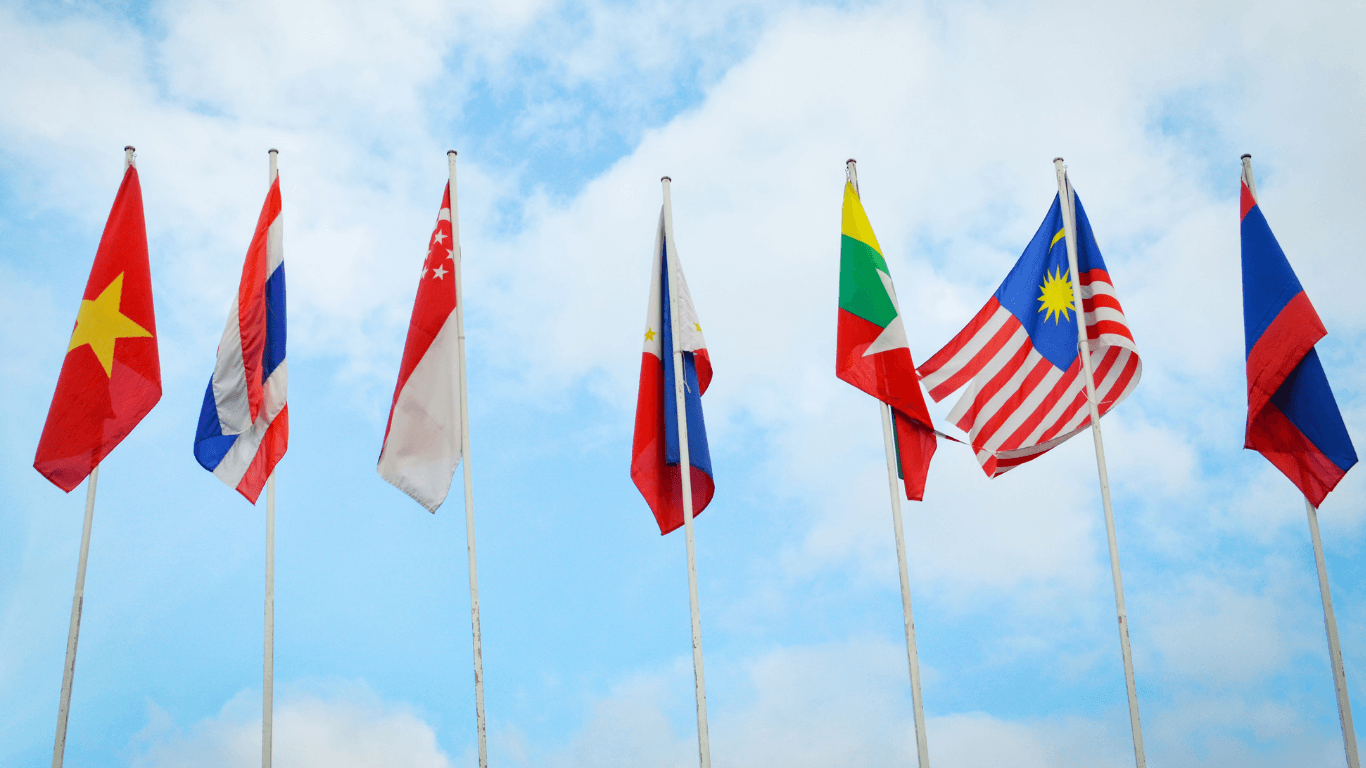
Artificial intelligence is quickly becoming part of how people work, study, search for information and interact with essential services. AI systems are already assisting customers, transcribing conversations, translating content and helping people complete tasks that previously required considerably more time and effort. These conveniences should not belong only to people who speak the languages best represented in technology.
Artificial intelligence is quickly becoming part of how people work, study, search for information and interact with essential services. AI systems are already assisting customers, transcribing conversations, translating content and helping people complete tasks that previously required considerably more time and effort.
These conveniences should not belong only to people who speak the languages best represented in technology.
The internet, despite its many problems, helped democratize access to information and opportunity. It allowed people from countries like the Philippines to participate in international industries, learn from resources produced around the world and build careers that would previously have been inaccessible from their own communities.
That access was never distributed perfectly. People with reliable connectivity, digital literacy and strong English skills benefited earlier and more extensively than others. Nevertheless, the internet created opportunities across geographical and economic boundaries on a scale that had not existed before.
As AI becomes another important layer of everyday life, we face a similar question: who will benefit from it?
If assistive and multilingual AI works exceptionally well in English and a handful of commercially dominant languages but performs poorly in Tagalog, Bahasa Indonesia and other underrepresented Southeast Asian languages, it risks reproducing the same inequalities, possibly in a much more consequential form.
“Language supported” does not always mean people understood
A company may say that its AI system supports Filipino, Indonesian, Thai or another regional language. However, listing a language among the available options does not necessarily mean the system understands how people actually use it.
Language is not simply a collection of words that can be translated one by one. It includes regional accents, code-switching, cultural references, levels of formality, social expectations and ways of expressing meaning that depend heavily on context.
In the Philippines, people regularly shift between English and Tagalog within the same conversation. Philippine English has its own pronunciation, vocabulary and rhythm. A speaker’s language may also reflect Cebuano, Ilocano, Hiligaynon or another regional linguistic background.
A system may technically recognize English and Tagalog while still struggling with the way Filipinos naturally combine them. It may misunderstand local names, addresses, abbreviations and expressions. It may perform well on clean studio recordings but fail during an ordinary telephone call with background noise, an unstable connection or a speaker who hesitates and changes direction halfway through a sentence.
This gap is especially visible in conversational AI and automatic speech recognition, or ASR. Research has identified Tagalog-English code-switching as both a common form of communication in the Philippines and an underrepresented area in natural-language processing. This illustrates the difference between nominal language coverage and meaningful local performance.
If people have to suppress their accents, avoid their natural language or speak unnaturally for a machine to understand them, then the technology has not fully adapted to its users. The users have been required to adapt themselves to the technology.
If people have to suppress their accents, avoid their natural language or speak unnaturally for a machine to understand them, then the technology has not fully adapted to its users.
Language quality increasingly affects access
This becomes more important as AI moves beyond optional productivity tools and into services people depend on.
Voice agents and automated systems are being introduced into banking, telecommunications, insurance, travel, healthcare, education and government services. In these environments, language accuracy is not merely a matter of convenience.
A misunderstood digit can affect an account number. An incorrectly recognized name can prevent a customer from completing a transaction. An unnatural translation can make an instruction confusing—or worse, offensive. (In 2019, Indonesian user @ko2w posted a viral screenshot of a Grab Indonesia driver’s abbreviated message, “dpn madm,” which the app’s AI erroneously translated into English as “you are not depressed.”) A system that repeatedly fails to understand a local language or regional accent can make a supposedly accessible service less accessible for the very people it was meant to assist.
When AI performs substantially better for some language communities than others, the result is not only a difference in product quality. It can become a difference in people’s ability to access information, services and opportunities.
English, Mandarin and major European languages currently benefit from enormous quantities of digital text and speech. This advantage was built over decades through websites, books, broadcasting, subtitles, government publications, academic research, call-center systems and previous generations of language technology.
Companies also had strong commercial reasons to invest in these languages first. Better products attracted more users, whose interactions produced more information and feedback, which then helped improve the products further.
Underrepresented languages entered this cycle later and received less investment. Their speakers should not have to wait indefinitely for technology to serve them properly.
When AI performs substantially better for some language communities than others, the result is not only a difference in product quality. It can become a difference in people’s ability to access information, services and opportunities.



More representative data makes better AI
The solution is not simply to collect as much data as possible. More data are not necessarily better when they are poorly designed, narrowly sourced or disconnected from how a system will be used.
Useful multilingual speech data must represent real people and realistic situations. For speech technology, this may include speakers from different regions, age groups and linguistic backgrounds. Depending on the purpose, speech datasets may require scripted and unscripted recordings, customer-service interactions, local terminology, natural code-switching, telephone-quality audio and structured expressions such as names, dates, addresses and account references.
It also requires qualified people who can determine whether the data are linguistically accurate. Linguists help establish how code-switching should be represented, how incomplete words should be marked, whether fillers and repetitions should be retained and how ambiguous speech should be handled. They can identify when a technically acceptable transcription misrepresents what the speaker actually meant. Their expertise can support speech data collection, transcription and annotation, linguistic testing and language model evaluation.
The same need continues after the model has been trained. AI-generated language can appear fluent while remaining subtly inaccurate, culturally inappropriate or inconsistent with the user’s request. Automatic measurements can identify some problems, but they cannot fully replace the judgment of people who understand the language, culture and context.
Human linguistic evaluation helps determine whether an AI response is accurate, natural, relevant, culturally appropriate and safe for its intended audience. It can reveal failures that may remain invisible to developers who do not speak the language themselves.
In this sense, linguists are not merely correcting the final output. They are helping companies understand how well their systems actually work.
Inclusion and commercial value are not opposing goals
There is sometimes a tendency to treat inclusion as a social obligation separate from product development and business growth. In multilingual AI, these goals are closely connected.
When an AI system understands more accents, language varieties and communication styles, more people can use it successfully. The system becomes more accurate and useful. Customers encounter fewer failures. Companies gain greater confidence in deploying it. The product can then serve markets it could not serve reliably before.
Making AI work properly for more kinds of people also makes it a better product and opens more markets for the company. A voice agent that understands Philippine English, Tagalog and natural Taglish is not only more inclusive. It is also more commercially viable for Philippine banks, telecommunications providers, contact centers and public-service organizations.
Linguistic inclusion should therefore not be considered an additional feature to be addressed after a product has already been built. It is part of building the product well.
Making AI work properly for more kinds of people also makes it a better product and opens more markets for companies.
Inclusion must not become extraction
There is also an ethical tension that must be acknowledged.
Collecting speech and language data from underrepresented communities is not automatically an act of inclusion. It can become another form of extraction if people in lower-cost markets provide the voices and linguistic knowledge used to build valuable systems while receiving little compensation, limited protection and no meaningful understanding of how their contributions will be used.
The goal of expanding AI access cannot justify careless or exploitative data practices. Responsible voice-data collection should include consent-verified contributors, appropriate compensation, secure handling and clearly defined permitted uses. Contributors should understand whether their recordings will be used for ASR training, system evaluation or another specified purpose. Consent for speech recognition should not silently become authorization for unrestricted voice cloning, biometric surveillance or unrelated future applications.
Companies should also consider who is represented in a dataset and who may have been excluded. A collection concentrated among young, urban and highly educated speakers may not reflect the wider population that the eventual system is expected to serve.
The people whose language makes AI systems possible should be treated as participants in technological development, not merely as inexpensive sources of raw material.
The role CCC hopes to play
For more than a decade, CCC has worked with language as both a professional discipline and a human form of expression. Our work in translation, editing, linguistic quality assurance and multilingual production, especially in the creative localization field, has required us to consider not only whether words are technically correct, but whether meaning, tone and context have been carried across accurately.
As we extend this experience into AI language-data services, our role is not to claim that we build the underlying models. Our role is to provide the human linguistic expertise those models need in order to work more reliably across languages and communities.
This can include responsible multilingual speech data collection, speaker recruitment, speech transcription and annotation, conversational-AI localization, review of AI-generated content and human linguistic evaluation. Our professional and academic linguists can help identify whether a dataset represents authentic language use and whether a system’s output is accurate, natural and appropriate for the people it is intended to serve.
We believe that the benefits of AI should extend across languages, accents and communities, not remain concentrated in markets already well represented in technology.
We also believe this expansion must respect the people whose voices, language and knowledge make it possible. Linguistic inclusion should be supported by informed consent, appropriate compensation, defined usage and accountable human oversight.
AI will become more useful as it learns to serve more of the world. Building that future responsibly will require more than powerful models. It will require local knowledge, linguistic judgment and the willingness to understand people as they actually communicate.
If you are developing multilingual AI, conversational systems, or speech technology for the Philippines and Southeast Asia, CCC would be glad to explore how our linguistic expertise can support your work.
Whether your project involves speech data collection, transcription and annotation, or human evaluation of AI-generated content, we welcome conversations about building systems that serve local users more accurately and responsibly. Contact us below.